America's 250th Anniversary: Rooted in New England
Where the Revolution began here. Two hundred and fifty years later, New England still carries that history in its streets, harbors, homes, gardens, and working landscapes.
On July 4, 2026, the United States marks 250 years since the signing of the Declaration of Independence. Our nation's story began in New England. Here, in town greens, harbors, meetinghouses, colonial streets, and fields, the independence movement took shape. These landscapes are not distant or abstract. They are still visible, still walkable, and still part of the region's identity.
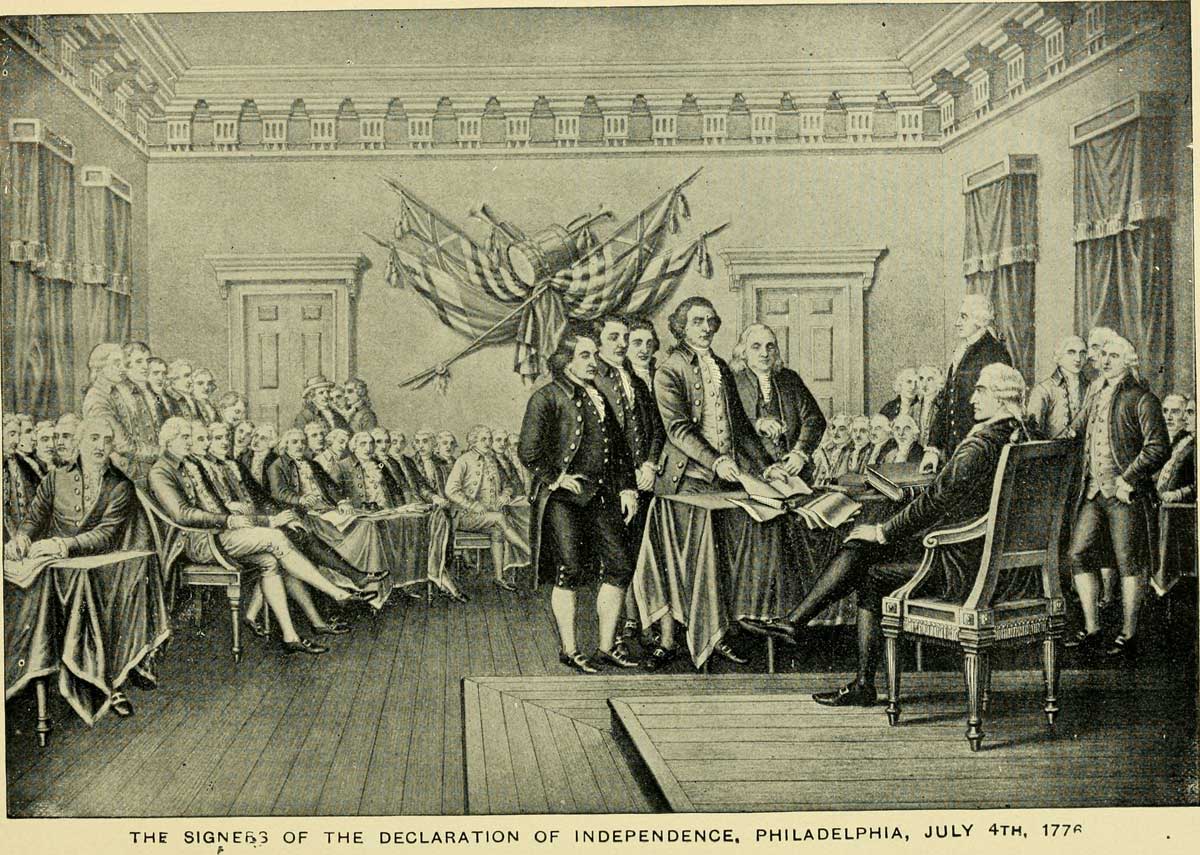
Our greater country; being a standard history of the United States from the discovery of the American continent to the present time ..Year: 1901 (1900s)Authors: Northrop, Henry Davenport, 1836-1909
The Road to Revolution
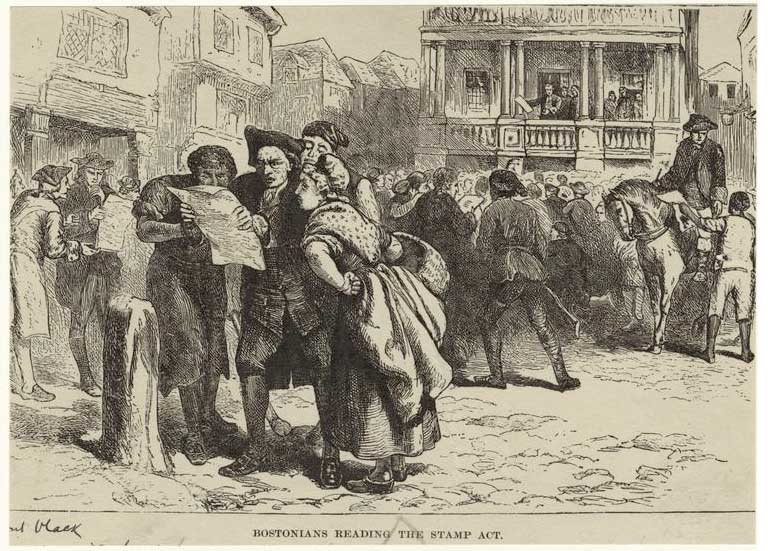
Before the American Revolution broke out into war, the American colonies were angered by taxes imposed by the British government. The Stamp Act of 1765 taxed the colonies on printed materials such as newspapers, legal documents, licenses, and pamphlets. Colonists argued that they could not be fairly taxed because they had no representation in Parliament. This growing resentment gave rise to the famous phrase, “no taxation without representation.” That same year, representatives of the Thirteen Colonies came together in New York City for the Stamp Act Congress. Together, they wrote an appeal to the British Crown called the 1765 Declaration of Rights and Grievances. Yet in the years that followed, their concerns were largely ignored, and the British Crown continued imposing taxes on the American colonies through the Townshend Acts without granting them governmental representation.
1765 Bostonians Reading the Stamp Act. Public Domain.
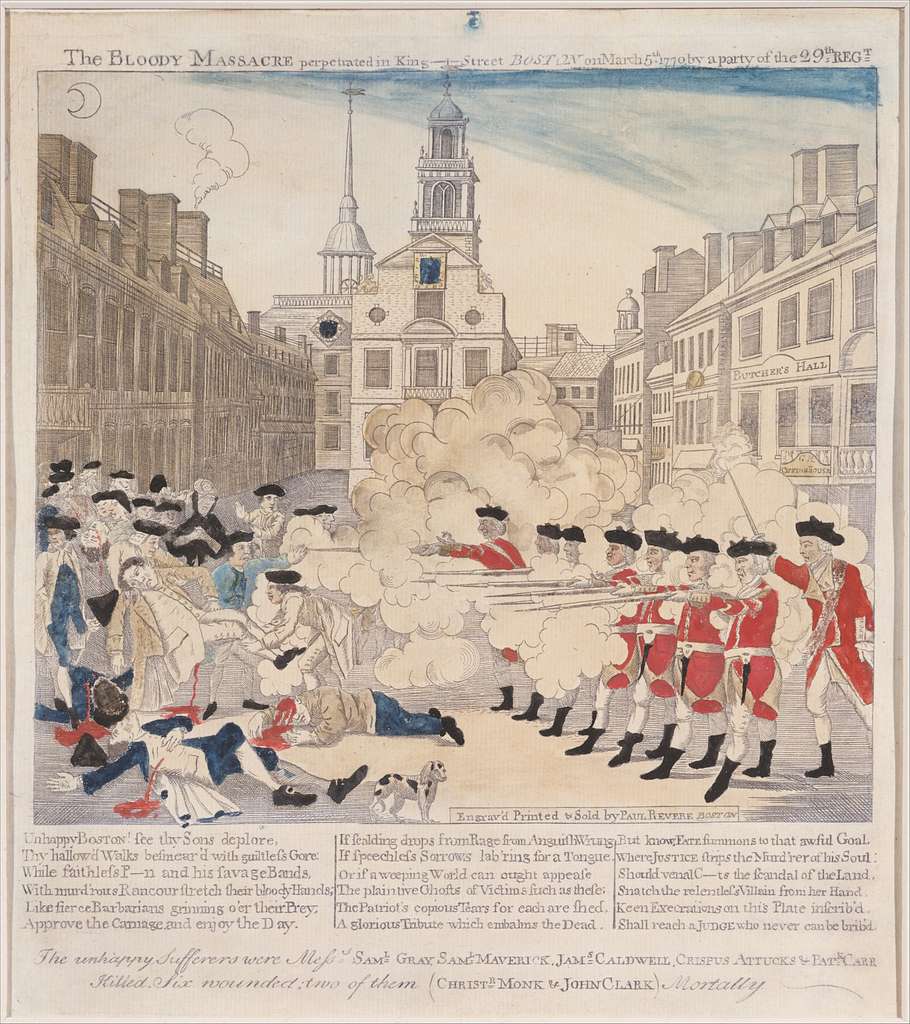
On March 5, 1770, a confrontation broke out between angry colonists and British troops in Boston, a major colonial city. The soldiers fired into the crowd, killing five colonists in what became known as the Boston Massacre. News of the shooting spread quickly through newspapers, speeches, and printed images. Patriot leaders used the event as proof that British power had become dangerous and oppressive. Paul Revere’s famous engraving helped turn the Boston Massacre into one of the most powerful pieces of Revolutionary propaganda, deepening colonial anger and pushing more people toward resistance.
1770 Paul Revere-The Boston Massacre - Metropolitan Museaum of Art
On December 16, 1773, members of the Sons of Liberty, disguised as Mohawk Indians, boarded ships in Boston Harbor and dumped hundreds of chests of tea into the water. The protest became known as the Boston Tea Party. To Patriots, it was a bold act of resistance. To the British government, it was an act of destruction that demanded punishment. Parliament responded with the Intolerable Acts, closing Boston Harbor and placing Massachusetts under tighter control.
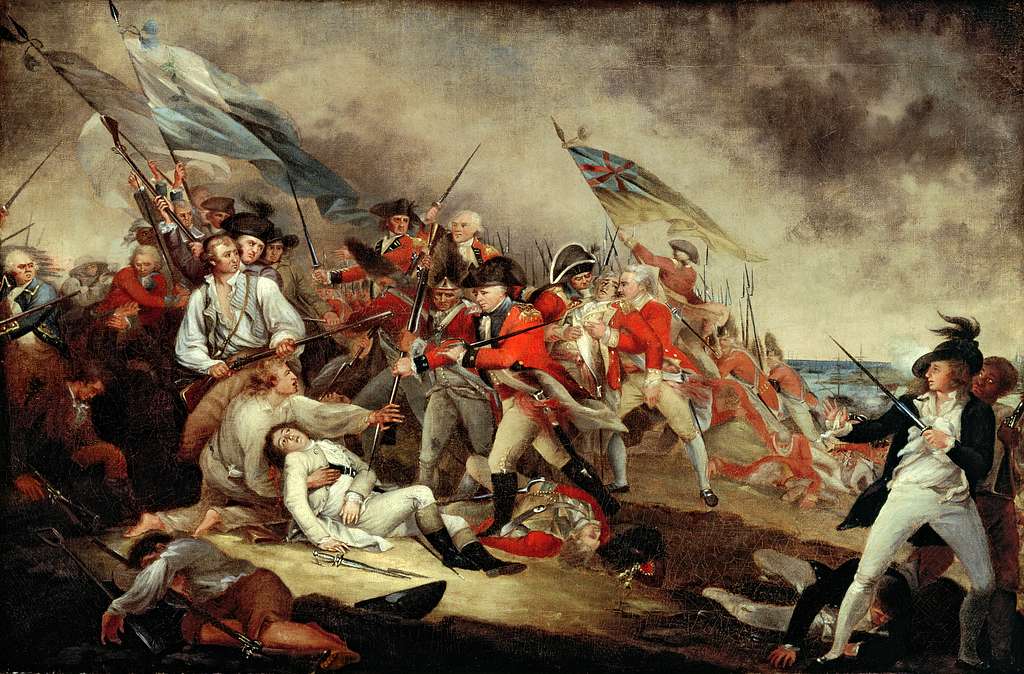
Delegates from twelve colonies met in Philadelphia for the First Continental Congress in September 1774, where they began coordinating a united response to the British Crown. In Massachusetts, tensions moved closer to war as colonial militias gathered supplies and prepared outside British-occupied Boston. On the night of April 18, 1775, Paul Revere’s famous midnight ride helped warn nearby towns that British troops were marching toward Lexington and Concord. The next day, fighting broke out at the Battles of Lexington and Concord. In response, the Second Continental Congress formed the Continental Army, with George Washington chosen as its commander in chief on June 15, 1775. Soon after, colonial forces fought the British at the Battle of Bunker Hill. With that, on August 23, 1775, King George III declared the colonies to be in open rebellion; now the war was truly begun.
New Hampshire While Massachusetts stood at the center of the early crisis, but it did not stand alone. The British government reserved New Hampshire’s white pines for its Royal Navy, limiting local colonial use. This led to protests such as the Pine Tree Riot in 1772, since the trees were vital to New Hampshire’s economy. As Massachusetts faced harsh British laws, New Hampshire Patriots seized weapons and gunpowder from Fort William and Mary in 1774 showing their readiness to resist British rule.
Rhode Island Rhode Island’s busy seaports depended on trade, but British enforcement of trade laws threatened local merchants. In 1772, colonists attacked and burned the Gaspee, a British ship that patrolled the coast to stop smuggling and enforce trade laws. Its destruction became an early and powerful act of open defiance against British authority. In May 1776, Rhode Island decided to formally declare independence from Great Britain, becoming the first colony to do so, even before the Continental Congress adopted the Declaration of Independence.
Connecticut Connecticut’s 1662 charter allowed it to elect its own governor and legislature, giving colonists unusual independence. When Britain tightened control after the French and Indian War, many saw this as a threat to their rights. Connecticut colonists resisted the Stamp Act and aligned with Massachusetts in opposing taxation without representation. In 1774, Connecticut colonists seized British goods at Fort Griswold, demonstrating their growing push for independence from Britain.
The Wider Colonial Resistance
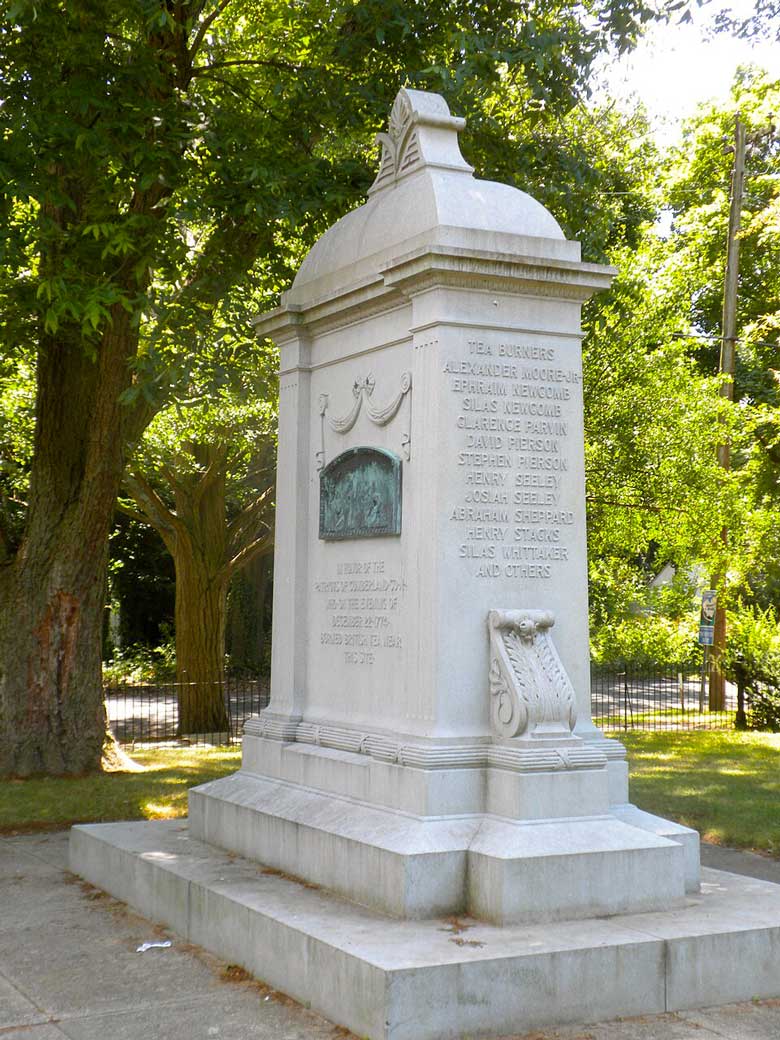
In toe, New Jersey Patriots had the Greenwich Tea Burning on December 22, 1774. On December 25, 1773, the British merchant ship called Polly arrived carrying taxed tea, but Philadelphia Patriots barred it from unloading in the port. In North Carolina, women organized a boycott against British tea and goods known as the Edenton Tea Party of 1774. Then Maryland showed open resistance with the burning of the Peggy Stewart in Annapolis on October 19, 1774, after the ship had carried tea in violation of the colonial boycott. Lastly, in November 1774, Virginia Patriots seized and destroyed British tea in the port of Yorktown.
Georgia was slower to join because it depended more on British military protection, especially on the frontier. Yet, Georgia Patriots feared that if Britain could take away rights in Massachusetts, it could do the same in Georgia. By 1775, Georgia had joined the other colonies in resistance and sent delegates to the Second Continental Congress.
Teaburner's Monument in Greenwich, New Jersey. Part of Greenwich Historic District on the NRHP since January 20, 1972. HD is on Main St.(Greate Street now) from Cohansey River N to Othello. Teaburner's Monument marks the last Tea destruction before the US Revolution in December 1774. Monument was constructed in 1903? At corner of Greate Street and Market, Greenwich, Cumberland County, New Jersey
From Local Uprisings to a Shared Cause
As the Revolutionary War gained momentum, George Washington forced the British to evacuate Boston on March 17, 1776, and on July 4, 1776, the Continental Congress adopted the Declaration of Independence. The British then shifted the war to New York, capturing New York City and trying to control the Hudson River to divide New England from the rest of the colonies. Washington kept the cause alive with victories at Trenton on December 26, 1776, and Princeton on January 3, 1777. In 1777, British General John Burgoyne moved south from Canada through the Hudson River valley, but American forces stopped him at Saratoga. Burgoyne surrendered on October 17, 1777, a turning point that helped bring France into the war as an American ally.
The war then became longer and wider. Washington’s army endured Valley Forge during the winter of 1777–1778, while the British later shifted their focus to the South. Charleston fell to the British in 1780, but American resistance continued under leaders such as Nathanael Greene and Daniel Morgan. Victories and hard fighting at Cowpens in January 1781 and Guilford Courthouse in March 1781 weakened British control in the South. The final major victory came at Yorktown, Virginia, where Washington, Rochambeau, Lafayette, and French naval support trapped British General Cornwallis, who surrendered on October 19, 1781. After years of fighting and negotiation, Britain formally recognized American independence in the Treaty of Paris in 1783.
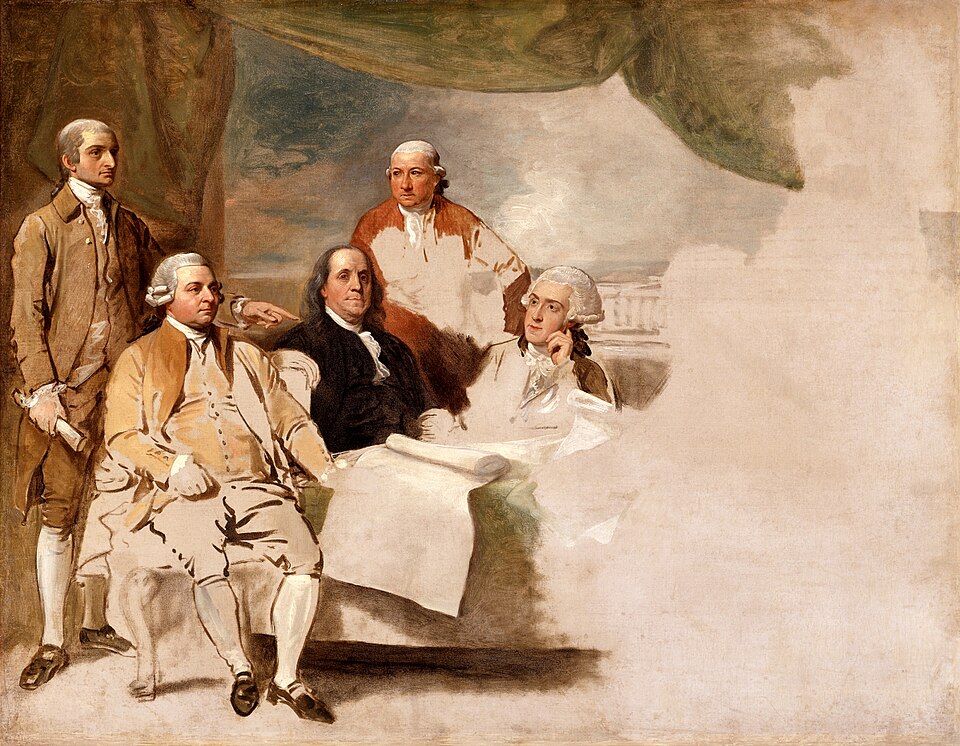
Benjamin West, American Commissioners of the Preliminary Peace Agreement with Great Britain, 1783-1784, London, England. (oil on canvas, unfinished sketch), Winterthur Museum, Winterthur, Delaware, gift of Henry Francis du Pont. From left to right: John Jay, John Adams, Benjamin Franklin, Henry Laurens, and William Temple Franklin. The British commissioners refused to pose, and the picture was never finished.
New England Voices of the Revolution
John Adams was born in Braintree, now Quincy, Massachusetts. He was a lawyer, delegate to the Continental Congress, signer of the Declaration of Independence, and later the second president of the United States.
Abigail Adams was John Adams’s wife and one of the strongest women’s voices of the Revolution. She was living through the war from Massachusetts while John served in Congress, and she famously urged him to “remember the ladies.”
Samuel Adams was born in Boston and became one of the leading Patriot organizers against British rule. He was a founder of the Sons of Liberty, a major voice against British taxation, and second cousin to John Adams.
John Hancock was a Massachusetts Patriot leader and president of the Continental Congress. He was one of the most famous signers of the Declaration of Independence and later became governor of Massachusetts.
Paul Revere was a Boston silversmith, engraver, and member of the Sons of Liberty. He was best known for his famous midnight ride on April 18, 1775, when he helped warn towns that British troops were marching toward Lexington and Concord.
Benjamin Franklin was born in Boston before becoming closely tied to Philadelphia. He was a printer, inventor, diplomat, and signer of the Declaration of Independence, and he appears on the U.S. $100 bill.
Roger Sherman was born in Newton, Massachusetts and later settled in Connecticut. He was the only Founder to sign all four major founding documents: the Continental Association, the Declaration of Independence, the Articles of Confederation, and the Constitution.
George Washington was not born in New England, but he became central to the Revolution there. He was chosen commander in chief of the Continental Army in 1775 and took command on New England ground in Cambridge.
Nathanael Greene was born near Warwick, Rhode Island and became one of George Washington’s most trusted generals. He was especially important in the Southern campaign of the war.
Ethan Allen was born in Litchfield, Connecticut and became closely tied to Vermont. He was the leader of the Green Mountain Boys, who helped capture Fort Ticonderoga from the British on May 10, 1775.
Mercy Otis Warren was born in Barnstable, Massachusetts and became one of the most important writers of the Revolution. She was known for political plays, poems, and writings that attacked royal authority and supported colonial resistance.
Deborah Sampson was born in Massachusetts and disguised herself as a man to serve in the Continental Army under the name Robert Shirtliff. She was one of the best-known women to serve directly as a soldier in the war.
Phillis Wheatley was the first published Black woman poet in America. In 1775, she wrote a poem to George Washington, who later invited her to visit him at his Cambridge headquarters.
Elizabeth Freeman, also called Mum Bett, was enslaved in Massachusetts and sued for her freedom in 1781. She was important because her case helped challenge slavery in Massachusetts using the language of liberty and rights.
Crispus Attucks was a man of African and Native descent who was killed in the Boston Massacre on March 5, 1770. He was remembered as one of the first martyrs of the Revolutionary cause.
Agrippa Hull was born free in Northampton, Massachusetts and served for years in the Continental Army. Later, he became a prominent Black landowner in Stockbridge. During the war, Hull was also closely associated with General Tadeusz Kościuszko, serving as his aide.
Hendrick Aupaumut was a Mohican leader from Stockbridge who served on the American side during the Revolution and later became a diplomat and writer working for Native political survival, representing the Stockbridge-Mohican Patriots. These were Native soldiers from western Massachusetts who sided with the American cause and fought hoping their service would help protect their land and sovereignty, though they were later displaced.
John Singleton Copley was born in Boston in 1738 and became the leading portrait painter of colonial America. He painted many important New England figures such as Paul Revere, John Hancock, and Samuel Adams. His portraits remain some of the most important visual records of the Revolutionary generation.
The Declaration of Independence of the United States of America, Philadelphia, July 4th, 1776. The painting shows the signing of the Declaration of Independence in what was later called Independence Hall, Philadelphia, on July 4, 1776. Members of the committee that drafted the Declaration of Independence--John Adams, Roger Sherman, Thomas Jefferson (presenting the document), and Benjamin Franklin--stand before John Hancock, the President of the Continental Congress. The painting includes portraits of 42 of the 56 signers and 5 other patriots.
From Founding Ground to Working Ground
New England is where the story of American independence first took root, and its landscapes still reflect that legacy today. The gardens, yards, and working grounds across the region carry forward a tradition of care, resilience, and connection to the land. New England Garden Tools is built on those same values, supporting the everyday work that keeps these spaces thriving. As the nation marks 250 years of independence, we are proud to honor the region where it all began and the landscapes that continue to shape its story.


.jpg)


